How to Buy Your First Home in the USA (Even If You Don't Know Where to Start)
Credit worries, immigration status, not enough saved — let's talk through what's real and what's actually possible for you.

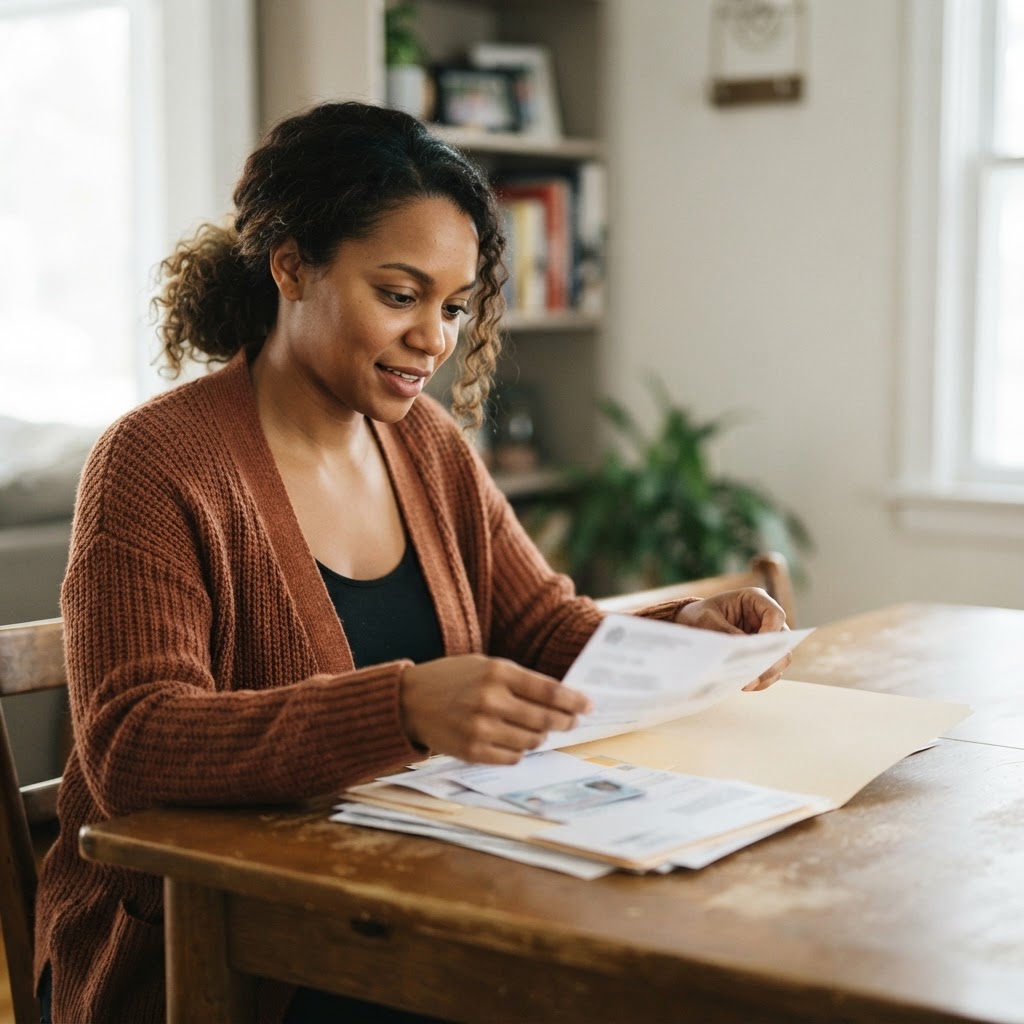
You've been renting for years. Every month, you hand over $1,500 — sometimes more — and at the end of it all, that money is just... gone. No equity. No ownership. No return. Meanwhile, the idea of buying a home feels like it belongs to someone else's life — someone with perfect credit, a big down payment, and a Social Security number since birth. I hear this every week from my clients, and I want to say this clearly: that feeling is normal, and it's also wrong.
Buying your first home in the USA is more achievable than most people think — especially if you know what the process actually looks like. I'm not going to sell you a dream. I'm going to walk you through the real steps, with real numbers, the same way I'd explain it to a family member sitting at my kitchen table.
Let's start from zero.
Step 1: Do You Actually Know What You Can Afford?
Before you look at a single listing on Zillow, you need to understand your buying power. This comes down to two things: your income and your existing debt.
Lenders use a measure called DTI (Debt-to-Income ratio). The general rule: your total monthly debt payments — including your future mortgage — shouldn't exceed about 43–45% of your gross monthly income.
Here's a real example: if you earn $5,000/month before taxes, lenders want your total debts (car payment, credit cards, student loans + new mortgage) to stay under roughly $2,150/month. If your other debts total $400/month, that leaves about $1,750 for your mortgage payment — which, at today's rates, could qualify you for a home in the $200,000–$230,000 range depending on your down payment and credit score.
Step 2: What About the Down Payment?
This is where most people stop before they even start — they assume they need 20% down. You don't.
There are options that let you buy with as little as 3% or 3.5% down. On a $220,000 home, that's $6,600 to $7,700 out of pocket. Some programs — especially for first-time buyers in specific counties — even offer down payment assistance that can cover part of that.
Here's the honest trade-off: the less you put down, the higher your monthly payment and the more you'll pay in mortgage insurance over time. I always lay out both scenarios for my clients so they can choose what works for their real life, not just the best-case version.
See What You Qualify For
Tell me your income and debts and I'll give you a real number — no pressure, no commitment.
Step 3: Does Your Credit Score Matter That Much?
Yes — but not in the way you think. A higher score gets you a better interest rate, which affects your monthly payment significantly. But you don't need perfect credit to buy.
- 580+ can qualify for certain low-down-payment programs
- 620+ opens up most conventional loan options
- 700+ is where you start getting noticeably better rates
If your score is below 580 right now, that's not a stop sign — it's a timeline. In my experience, most clients can move their score 40–60 points in 3–6 months with a focused plan. I help with this all the time.
Step 4: What If You Don't Have a Social Security Number?
You can still buy a home. There are loan programs specifically designed for borrowers who use an ITIN (Individual Taxpayer Identification Number) instead of an SSN. The terms are a bit different — usually a higher down payment (around 10–20%) and documentation requirements — but it is absolutely possible, and it's something I work with regularly.
I serve everyone, regardless of immigration status. Period.
Buying Without an SSN? Let's Talk
I work with ITIN borrowers regularly — let me show you what's possible in your situation.
Step 5: Get Pre-Approved Before You Fall in Love With a House
Pre-approval is the step that turns you from a browser into a real buyer. It tells you exactly how much you can borrow, and it shows sellers you're serious. In competitive markets, an offer without pre-approval often doesn't even get considered.
The pre-approval process involves a credit check, income verification (pay stubs, tax returns, bank statements), and a review of your debts. It usually takes a few days — not weeks.
Ready to Take the First Real Step?
Here's what I want you to take from this: buying your first home isn't about being perfect. It's about knowing where you stand, understanding your options, and working with someone who will be straight with you.
If you're not sure where you fit — credit, income, status, savings — reach out to me directly. Tell me your situation, and I'll tell you honestly what's possible and what the path looks like. No pressure. No vague promises. Just a real conversation.
Your next step
Ready to Take the First Step?
You don't need to have it all figured out. Send me a message and let's talk through your real situation — no pressure, no obligations.