Renting vs. Buying a Home: Which One Actually Makes Sense for You?
Before you decide, let's look at the real numbers — not just the marketing pitch.

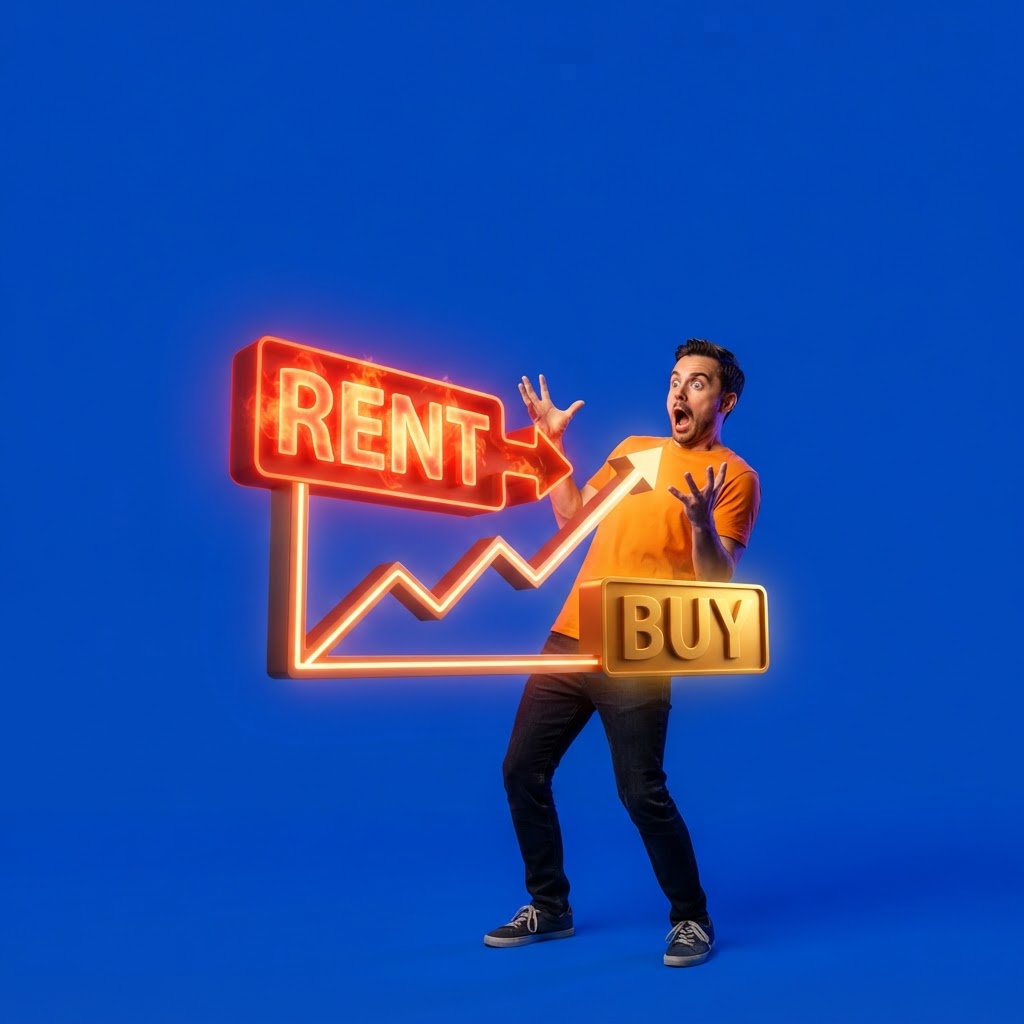
You've probably asked yourself this question at some point — maybe after writing yet another rent check, or after a friend mentioned they just bought a house. Should I keep renting, or is it finally time to buy? It's one of the most common things my clients bring up, and honestly, there's no single right answer. But there is a right answer for you, and that's what I want to help you figure out.
I'm not here to push you toward buying just because that's what loan officers do. I've had clients where renting was genuinely the smarter move — at least for another year. I've also had clients who were convinced they couldn't buy and ended up in their first home six months later. The truth lives somewhere between the scary myths and the hype.
Let's break this down honestly, with real numbers and real situations — so you can actually make a decision that fits your life.
What Are You Really Paying When You Rent?
Renting feels safe because the cost is clear: you pay $1,800/month and that's it. No surprise roof repairs, no property taxes. I get it.
But here's the thing — that $1,800 goes entirely to your landlord's pocket. After 5 years, you've paid $108,000 and own exactly zero equity. None.
- Your landlord builds wealth. You build nothing.
- Your rent can increase every year — and in most U.S. markets, it has.
- You have no control: no pets, no painting the walls, no stability if they sell.
Renting makes sense if you're planning to move within 1–2 years, your income is very unstable, or you're in a city where buying is genuinely out of reach right now. That's honest. But if none of those apply to you, keep reading.
What Does Buying Actually Cost? (Real Numbers)
Let's say you're looking at a home priced at $300,000 in a mid-size U.S. market.
- Down payment (3.5% FHA option): ~$10,500
- Estimated monthly payment (principal + interest + taxes + insurance): ~$2,100–$2,300
- Closing costs: typically $4,000–$7,000 (sometimes negotiable with seller help)
Yes, the monthly payment may be a little higher than your current rent. But now part of every payment is building equity — wealth that belongs to you. After 5 years in that home, you could have $30,000–$50,000 in equity depending on appreciation, and you've locked in your payment while your neighbor's rent keeps going up.
There are options that let you buy with very little down — some even allow 0% down if you qualify. The barrier is often lower than people think.
"I Can't Buy Because…" — The Most Common Myths
I hear these every week. Let me address them directly:
- "My credit isn't good enough." Some programs work with scores as low as 580, and there are paths even below that.
- "I don't have a Social Security Number." There are mortgage programs specifically for ITIN holders. This is more common than people realize — I work with clients in this situation regularly.
- "I'm self-employed and my income looks weird on paper." There are loan programs that use bank statements instead of tax returns.
- "I don't have enough saved." Down payment assistance programs exist in most states. Some clients close with as little as $1,000 out of pocket.
Your situation is probably less of an obstacle than you've been told.
So… Which One Is Actually Better?
Here's my honest take: buying wins long-term for most people who plan to stay in one place for 3+ years. The math almost always favors ownership over time — equity, tax benefits, stability, generational wealth.
But buying before you're ready — wrong timing, wrong budget, wrong home — can hurt you. That's why the conversation matters before the decision.
Ready to Find Out Where You Stand?
Talk to Liuver and get a clear picture of your options — no commitment needed.
Next Steps: Let's Figure Out Your Situation Together
You don't have to decide today. But you do deserve real information — not guesses, not fear, not generic advice from the internet.
Reach out to me directly. Tell me where you are: renting, thinking about buying, unsure about your credit or status. I'll give you an honest answer about what's possible and what makes sense for your life right now — not a sales pitch.
That's what I'm here for.