Buy the House AND Fix It Up — With Just One Loan
FHA 203(k) and HomeStyle loans let you roll the purchase price and renovation costs into a single mortgage. Less hassle, one payment, and you move into the home you actually want.

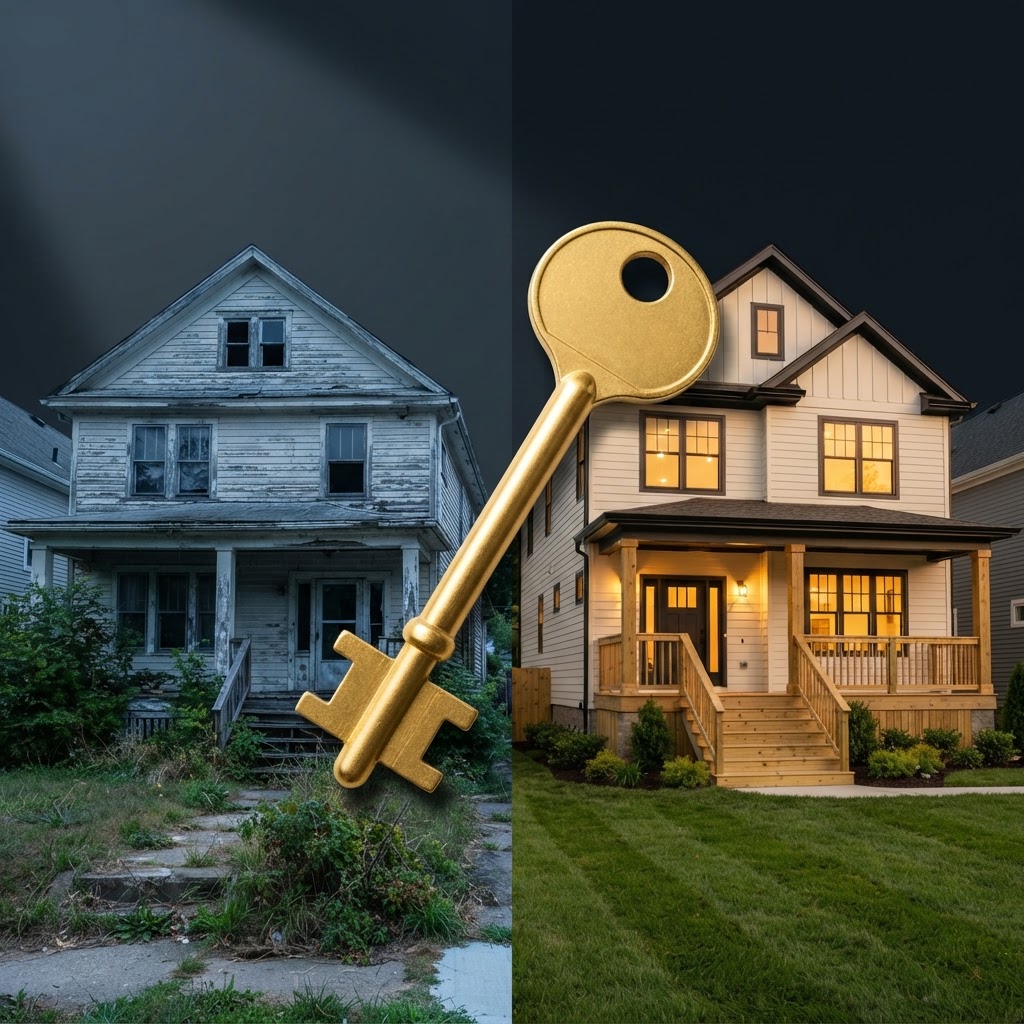
You found a house that has everything you want — great location, good bones, the right price — but it needs work. Maybe the kitchen is stuck in 1987. Maybe the roof has seen better days. Maybe it's a foreclosure that needs a full gut job before anyone can live there. You want the house, but you don't have an extra $40,000 sitting around for renovations on top of a down payment.
This is exactly the situation where most buyers give up — and they shouldn't. There are two loan programs built specifically for this: the FHA 203(k) and the Fannie Mae HomeStyle. Both let you buy the home and finance the renovation in a single mortgage. One loan, one closing, one monthly payment.
Let me walk you through how each one works, who qualifies, and how to figure out which one fits your situation.
What Is a Renovation Loan and Why Does It Make Sense?
A renovation loan wraps the purchase price and the estimated repair costs into one loan amount. Instead of buying a home and then scrambling to find a contractor you can pay out of pocket, the lender holds the renovation funds in a special account and releases them as the work gets done.
Here's a simple example: You find a home listed at $220,000 that needs $35,000 in repairs. A renovation loan lets you finance both — up to $255,000 — with a single down payment based on the combined amount. You're not paying two loans or two sets of closing costs.
FHA 203(k): The Friendlier Option for First-Time Buyers
The FHA 203(k) is government-backed, which means it comes with more forgiving qualification requirements. In my experience, this is the one most of my first-time buyer clients end up using.
- Minimum credit score: 580 (with 3.5% down)
- Down payment: As low as 3.5% of the combined purchase + renovation amount
- Loan limits: Vary by county — check your local FHA limit
- Two versions: Limited (repairs up to $35,000, no structural work) and Standard (major renovations including structural changes, requires a HUD consultant)
Real example: $220,000 purchase + $30,000 repairs = $250,000 total. With 3.5% down, you'd need about $8,750 at closing. Your loan would be approximately $241,250.
The catch? FHA 203(k) requires mortgage insurance (MIP), which adds to your monthly payment. And the process moves slower than a regular purchase — plan for 45–60 days to close and expect more paperwork.
Fannie Mae HomeStyle: More Flexibility, Higher Bar to Qualify
The HomeStyle loan is a conventional option. It allows more renovation types (including luxury upgrades like a pool), and you don't pay the same mortgage insurance structure as FHA — which can save you money monthly if you qualify.
- Minimum credit score: Usually 620–640
- Down payment: As low as 3% for primary residence (but PMI applies below 20%)
- No hard cap on renovation amount — as long as the finished value supports it
- Works for second homes and investment properties too (FHA 203(k) does not)
The trade-off: it's harder to qualify for, and lenders who actually know how to process HomeStyle loans aren't always easy to find.
Not sure which loan fits your situation?
Tell me about the house and I'll tell you which program makes more sense for you.
Which One Should You Choose?
Here's the honest breakdown:
- If your credit is below 620 or you want the lowest down payment possible → FHA 203(k)
- If your credit is strong and you want to avoid FHA mortgage insurance → HomeStyle
- If you're buying an investment property or second home → HomeStyle only
- If the repairs are cosmetic and under $35,000 → 203(k) Limited keeps it simpler
What About the Renovation Process Itself?
Both programs require licensed contractors. You can't do DIY work and get reimbursed — the lender needs to verify the work is done professionally. After closing, funds are held in escrow and released in draws as inspections confirm progress.
The timeline from contract to move-in is typically 60–90 days, longer than a standard purchase. Go in knowing that, and you won't be surprised.
Ready to Look at a House That Needs Work?
If you've been passing up homes because they need repairs, I want you to know those homes are often the best deals on the market — and now you know there's a way to finance both the purchase and the fix-up together.
If you want to run numbers on a specific property — what your down payment would be, what the monthly payment might look like, whether you'd qualify — reach out to me directly. No pressure, no sales pitch. Just a real conversation about whether this works for you.